
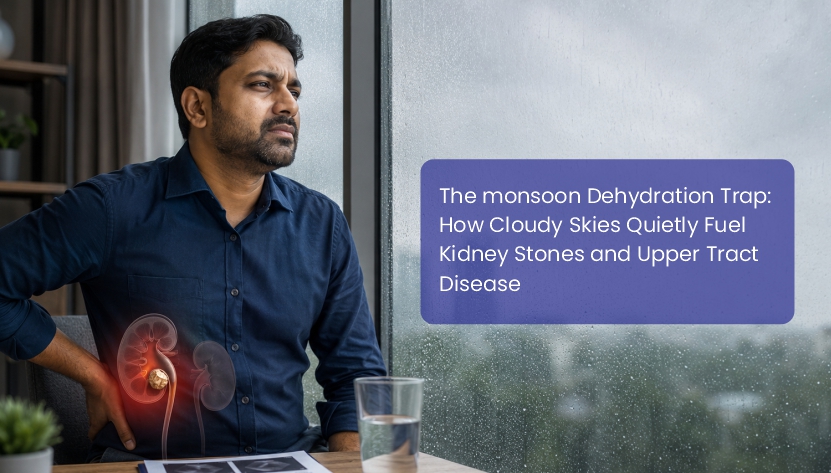
The monsoon Dehydration Trap: How Cloudy Skies Quietly Fuel Kidney Stones and Upper Tract Disease
Most people associate dehydration with scorching summer days. The rainy season feels different: the air is cool, the heat has lifted, and the humidity makes everything feel damp. So why would anyone worry about drinking enough water?
This is the monsoon dehydration trap, and it catches thousands of people every year. When skies are overcast and temperatures drop, the sensation of thirst decreases significantly. People simply forget to drink water. The result is concentrated urine, mineral build-up in the kidneys, and, for many, the agonising onset of kidney stones.
For those with a history of stones, or for patients currently undergoing uro-oncology treatment, this seasonal pattern can become a serious medical problem.
Why Thirst Decreases in the Monsoon
The body's thirst mechanism is triggered partly by heat and physical exertion. When ambient temperatures fall and humidity rises, the brain receives fewer thirst signals. People drink less, sometimes as little as half their normal intake, while the kidneys continue filtering blood and producing urine.
The result is highly concentrated urine, rich in calcium, oxalate, uric acid, and other minerals. When these minerals exceed the urine's ability to keep them dissolved, they crystallise and kidney stones begin to form.
The Link Between Kidney Stones and Upper Tract Cancer
Most kidney stones pass on their own or are treated without lasting harm. However, there is a lesser-known relationship between chronic stone disease and the development of upper urinary tract cancers, specifically cancers of the renal pelvis and ureter.
Long-standing inflammation caused by repeated stone episodes can damage the lining of the urinary tract. Over time, this increases the risk of urothelial carcinoma — a cancer that begins in the cells lining the urinary system. Patients who experience repeated stone episodes, particularly those with a genetic predisposition, should discuss cancer surveillance with their urologist.
Monsoon Eating Habits That Worsen Kidney Stone Risk
The rainy season also brings a shift in eating habits. Fried snacks, high-salt foods, and comfort meals become more frequent, and several of these are known triggers for stone formation:
- High-oxalate foods — spinach, tomatoes, and nuts consumed in large quantities may raise urine oxalate levels
- Excess salt — increases calcium excretion in urine, a key stone-forming mineral
- Protein-heavy meals — may elevate uric acid levels, contributing to uric acid stones
- Tea and coffee in excess — may further contribute to concentrated urine when overall fluid intake is low
Special Risk: Patients on Chemotherapy
For uro-oncology patients receiving chemotherapy for bladder, kidney, or prostate cancer, dehydration poses an additional danger. Many chemotherapy drugs are nephrotoxic, meaning they can damage the kidneys, and adequate hydration is an important protective measure.
A patient who is already dehydrated before entering a treatment cycle may face a heightened risk of:
- Acute kidney injury from chemotherapy toxicity
- Urinary obstruction from existing or newly formed kidney stones
- Delayed excretion of drugs, potentially leading to increased side effects
Oncology teams typically advise adequate fluid intake before and after infusion sessions, but the general drop in water consumption during the monsoon can quietly undermine these instructions.
How Much Water Is Actually Enough?
General recommendations suggest approximately 2 to 3 litres of water per day for healthy adults. For people who frequently develop kidney stones or patients receiving active treatment, a urologist may advise a higher target based on individual health needs.
A practical guide is to observe urine colour. Urine should generally appear pale yellow rather than dark. Dark urine may be a sign of inadequate hydration, regardless of the weather outside.
Practical Steps to Protect Yourself
- Set water-intake reminders on your phone and do not wait until you feel thirsty
- Begin each morning with two glasses of water before having tea or coffee
- Limit high-salt and high-oxalate foods during the rainy season
- If you have had a kidney stone before, discuss regular monitoring with your urologist
- Report flank pain, cloudy urine, blood in urine, or reduced urine output to your doctor promptly
Conclusion
The rainy season creates an invisible dehydration risk that can directly affect kidney and urinary tract health. For the general population, this may mean a higher risk of kidney stones. For cancer patients, dehydration can complicate treatment and recovery.
The solution is simple but requires conscious effort: drink water consistently, regardless of how cool or humid the weather feels.
Contact Us
The Gujarat Uro Oncology Associates team offers expert consultation, diagnosis, second opinions, and treatment planning for urological cancers. To learn more or book an appointment, contact 91 75730 04253 or email bakshihemang@yahoo.co.in.